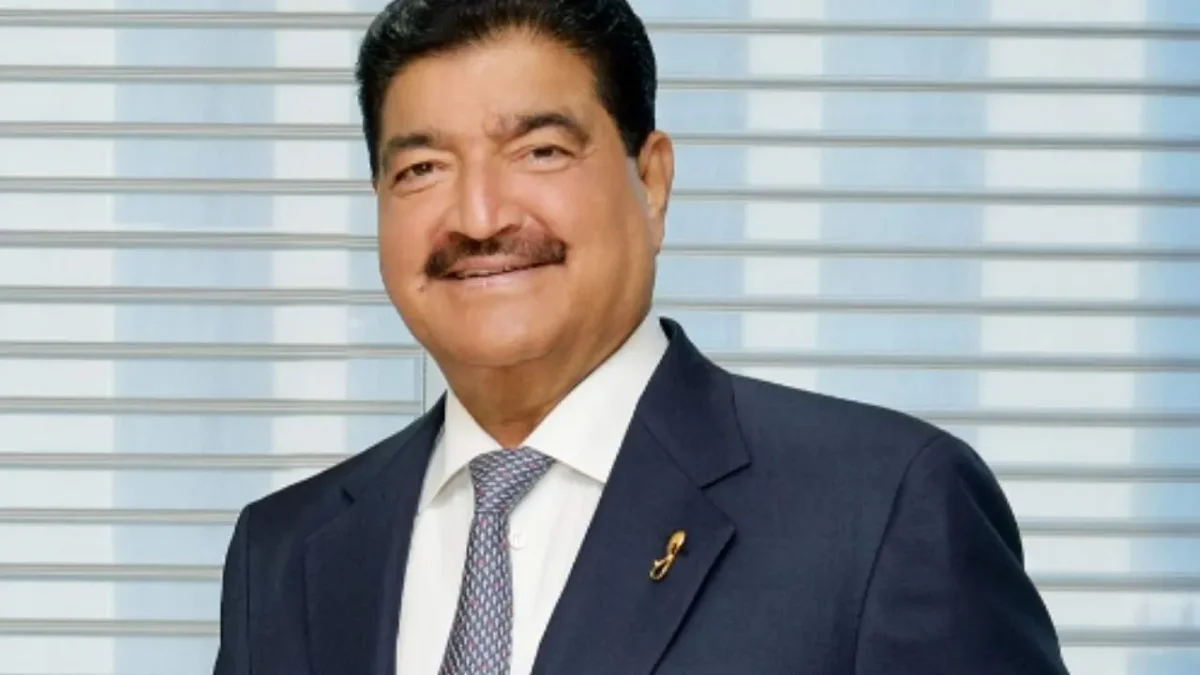
DUBAI: Until December 2019, NMC Group was one of the most remarkable corporate success stories to emerge from the Gulf. Founded by BR Shetty in Abu Dhabi in 1975, the healthcare group had grown from a single clinic into one of the region's largest private healthcare operators.
Its parent company, NMC Health plc, was listed on the London Stock Exchange (LSE) in 2012 and entered the prestigious FTSE 100 index in 2017.
The numbers looked impressive. Revenue rose from $1.22 billion in 2016 to $1.60 billion in 2017 and crossed $2 billion in 2018. Net profit increased from $151.4 million in 2016 to $209.2 million in 2017 and $251.9 million in 2018. At its peak in August 2018, NMC's market value reached approximately £8.6 billion.
Then came December 17, 2019.
Debt is the key
On that day, the US investment firm Muddy Waters Capital published a report questioning NMC's financial position. Its central concern was the group's borrowings. Was the debt disclosed to investors the actual amount NMC owed? Were the reported cash balances and assets reliable? And had the company accumulated far more debt than its published accounts suggested?
Muddy Waters was a short seller. It had disclosed that it held a short position in NMC shares and therefore stood to benefit if the share price fell. That commercial interest was important when assessing its allegations. But the questions it raised could not simply be dismissed.
What followed was far bigger than a confrontation between a short seller and a London-listed company. Investigations began to uncover billions of dollars in borrowings that had not been properly disclosed, transfers of company money and attempts to conceal the group's true financial position.
The picture of a thriving healthcare giant began to unravel. Within months, NMC's shares were suspended and the company entered administration.
How did a group reporting billions of dollars in revenue and hundreds of millions in profits reach this point? Who knew about the hidden borrowings? Where did the money go? And what roles did its founder, BR Shetty, and former chief executive Prasanth Manghat play?
The answers lie in a trail of transactions, parallel accounting records and financial arrangements that remained hidden from investors and auditors for years.
The debt that was not in the books
The most startling revelation was the difference between the debt NMC reported and what it actually owed.
The UK Financial Conduct Authority (FCA), after investigating the company's disclosures, found that NMC had been operating two sets of accounting records. One reflected the borrowings included in the company's published financial statements. The other contained additional borrowings that were kept out of the reported figures.
On December 31, 2018, NMC had reported debt of approximately $1.99 billion. But the FCA found that the actual debt was around $5.91 billion. In other words, nearly US$3.92 billion had not been disclosed.
The discrepancy widened further. As on June 30, 2019, the company reported debt of about $2.1 billion, whereas the actual figure was approximately $6.2 billion. The undisclosed portion was around $4.1 billion.
By March 2020, NMC itself estimated that the group's total debt had reached approximately $6.6 billion.
The difference was not a mere accounting error. The FCA found that NMC had maintained parallel records, with borrowings classified internally as "Showing" and "Non-Showing". The latter were excluded from the financial statements presented to investors.
How was this possible for so long? The answer lies partly in the way the group obtained money.
Borrowings disguised as supplier payments
A substantial part of the concealed borrowing was channelled through supply-chain finance and arrangements involving suppliers.
In simple terms, banks financed invoices raised by suppliers for goods or services that were not actually intended to be supplied. The funds were then channelled back into the NMC group. This made what was effectively borrowing appear to be ordinary commercial activity.
The arrangement helped NMC obtain funds without showing the full amount as borrowing in its published accounts. The FCA found that supply-chain finance facilities, including those for which NMC was the ultimate guarantor, had not been properly disclosed.
The group also maintained spreadsheets that recorded the actual borrowing position. These were different from the figures presented to auditors and investors.
The scale of the discrepancy was evident in internal records. A spreadsheet circulated in November 2015 listed 50 banking facilities and exposure of AED8.24 billion. Another spreadsheet sent to Manghat in August 2016 listed 69 facilities and borrowing of AED10.4 billion. The reported debt figures were substantially lower.
The question is obvious: if the actual borrowings were being tracked internally, how could the published accounts continue to show a much smaller liability?
The court's findings point to a system in which the concealed debt was not simply overlooked. It was deliberately kept away from the financial statements and the scrutiny of auditors.
Where did the money go?
The debt was only one part of the story. The other, perhaps more disturbing, part was the movement of NMC's money.
The Abu Dhabi Global Market (ADGM) Court of First Instance examined more than 500 transfers into Shetty's personal bank accounts. The total came to AED4.183 billion. After accounting for money transferred back to the group, the net value of these transfers was approximately AED2.6 billion.
The court accepted the accounting evidence and found that Shetty knowingly received substantial amounts improperly transferred from NMC.
What happened to the money?
The judgment examined personal assets and investments acquired using funds transferred from the group. These included investments in Travelex, properties in Dubai Hills, an interest in a private aircraft and an investment in oil-exploration leases in Wyoming in the US.
One example was a Gulfstream G450 aircraft acquired jointly by Shetty and another individual for private use. The court found that Shetty knowingly acquired personal assets and investments with funds transferred from NMC.
The court also found that Shetty helped conceal the group's borrowings from its auditors and allowed misleading financial statements to be published. His role, therefore, went beyond receiving money. The court found that he knowingly participated in the wider fraud.
Manghat's role
Shetty was the founder and controlling figure behind NMC. But the financial machinery of the group was in the hands of its senior management.
Prasanth Manghat had joined NMC in 2011 and went on to serve as chief financial officer (CFO), deputy chief executive and, from 2017, chief executive.
The court found that Manghat knowingly participated in the fraud and enabled unlawful transfers of NMC funds for the benefit of Shetty, himself and others.
His role was particularly important in the concealment of the borrowings. The internal spreadsheets showing the actual debt position were circulated to senior executives, including Manghat. The court rejected the argument that he was unaware of the group's true financial position.
The concealed borrowing was also used to keep the scheme running. Fresh borrowing helped meet interest and finance costs on existing debt, supported transfers and provided funds to sustain the group's operations. In effect, new borrowing helped keep earlier borrowing and the financial deception going.
The court also examined attempts to mislead the external auditors, Ernst & Young (EY). These included fabricated bank correspondence and an impersonated bank official in connection with the confirmation of bank balances.
This was not simply a case of a company failing to disclose a few loans. The court found that the concealment involved financial records, transactions and efforts to prevent auditors from discovering the true position.
Bank of Baroda (BoB) and ADCB
The NMC scandal also raised serious questions about the role of banks that financed the group.
Bank of Baroda (BoB) was initially a defendant in the administrators' proceedings. The administrators alleged that Shetty and the bank's then managing director, PS Jayakumar, had agreed that NMC would repay virtually all its outstanding liabilities to the bank in exchange for the bank not revealing the true position of its accounts to the company's auditors.
The allegation was serious. The administrators argued that the bank's knowledge of the group's actual account position was central to the concealment.
However, Bank of Baroda (BoB) settled the claims brought against it towards the end of the trial. It paid $600 million to the joint administrators of NMC. The claims against the bank were then discontinued.
The court did not make a finding against Bank of Baroda (BoB) or Jayakumar. The judge said it would be unfair to do so without hearing the bank's response to the administrators' closing arguments. The settlement was made without an admission of liability or wrongdoing.
The $600 million was therefore a settlement payment to NMC's administrators, representing a recovery for the insolvent group. It was not a fine imposed by the court.
There was also a separate case involving ADCB. The bank brought claims against Manghat over losses arising from the NMC transactions and the financial information provided to it.
The bank established claims including approximately $1.022 billion in outstanding liabilities and $168.989 million in lost profits, subject to adjustments and recoveries.
It is important not to confuse the two bank cases. Bank of Baroda (BoB) settled the administrators' claims without admitting wrongdoing, and the court made no finding against it. ADCB, on the other hand, succeeded in its separate claim against Manghat.
The collapse
The Muddy Waters report was followed by mounting scrutiny of NMC's accounts and borrowings. The company initially rejected the allegations, but the subsequent investigations exposed the scale of the undisclosed debt.
The shares were suspended from trading in February 2020. In March, NMC said its estimated debt had reached approximately $6.6 billion, including convertible bonds and sukuks (Islamic bonds). The group's liabilities involved more than 75 debt facilities from over 80 financial institutions.
On April 9, 2020, NMC Health plc entered administration in the UK. In September that year, NMC Healthcare, NMC Holding and several other group companies entered administration in Abu Dhabi.
The group was later restructured, with 34 NMC companies exiting administration in 2022 under a new ownership structure. The healthcare operations survived, but the listed company's collapse left investors and creditors with enormous losses.
What court did
The latest development came on November 5, 2026, when the ADGM Court of First Instance found Shetty and Manghat liable for fraudulent and wrongful trading.
The court identified $5.397 billion as the starting point for assessing the contributions they should make to NMC's assets. This is not a final award of $5.397 billion against ‘each man’
The final amounts payable will be determined after further submissions and proceedings.
The figure should also not be confused with the amount transferred to Shetty's personal accounts. The AED2.6 billion represents the net direct transfers to him. The $5.397 billion relates to the wider assessment of contributions arising from the fraudulent trading claims.
The court also upheld ADCB's separate claims against Manghat. Further proceedings will determine the financial consequences, including the final amounts and other outstanding matters.
For a company that was once valued at approximately £8.6 billion and reported record profits, the fall was extraordinary. Muddy Waters did not create the fraud.
Its report, however, brought questions about NMC's financial position into the open. The investigations and court proceedings that followed revealed how billions in borrowings had been concealed and how company funds had been transferred.
The real story of NMC is not just how a healthcare group collapsed. It is how a business that appeared to be growing successfully could operate for years with a financial position so different from the one presented to its investors, lenders and auditors — and how the people who controlled it were eventually held accountable.