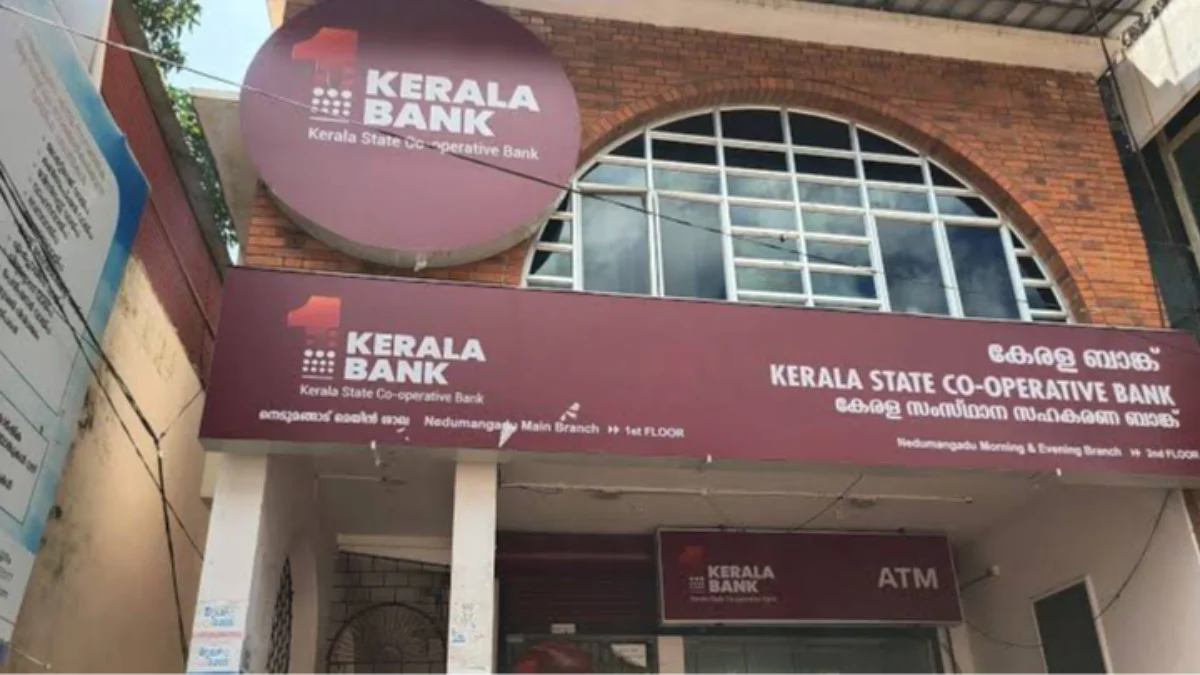
THIRUVANANTHAPURAM: Kerala Bank is exploring ways to shore up its capital, with discussions under way with the state government on a possible fresh infusion and a potential route through NABARD. The urgency is clear: with its capital adequacy ratio (CAR) hovering close to the regulatory minimum of 9 per cent and a Rs117.08-crore loss in FY26, the bank has little room to expand lending without strengthening its capital base.
Primary agricultural cooperative credit societies (PACS) constitute the largest shareholder group in Kerala Bank with 45.7 per cent stake, followed by the Kerala Government holding 43.8 per cent. The cooperative societies’ role is significant because they have already helped the bank shore up its regulatory capital by subscribing to the Rs300-crore Tier 2 bond issue last year.
However, the bonds strengthened regulatory capital without adding to the bank’s paid-up share capital.
Talking to businessbenchmark.news, a senior Kerala Bank official said the bank was in discussions with the state government on ways to bring in fresh capital. The official said the government could borrow from NABARD to fund its contribution to the share capital of the cooperative bank.
“Section 27 of the NABARD Act, 1981, explicitly empowers NABARD to lend to State Governments to enable them to contribute to the share capital of cooperative credit institutions,” the official said.
The proposed route, if found feasible and approved, could provide a way to strengthen the bank’s capital without relying entirely on the state government’s budgetary resources. However, the discussions are still under way, and the availability of the facility would depend on the applicable eligibility conditions and the outcome of consultations with NABARD and the state government.
Bonds boosted capital in FY25
This is not the first time Kerala Bank has faced pressure to strengthen its capital. Last year, it raised Rs300 crore through Tier 2 bonds subscribed to by cooperative credit societies. The issue helped bolster its regulatory capital.
The need for another round of capital support comes as the bank seeks to expand lending while managing a sizeable stock of bad loans. Although its gross non-performing asset (NPA) ratio improved to 9.28 per cent in FY26 from 11.60 per cent a year earlier, its provision coverage ratio fell to 31 per cent from 39.10 per cent, leaving a relatively thin provision cushion against gross NPAs of Rs4,562.83 crore.
The central question is whether Kerala Bank can secure enough fresh capital to rebuild its lending capacity while improving profitability and asset quality. With losses limiting its ability to augment capital through retained earnings, an external infusion may become increasingly important to its growth plans.