KOCHI: The government is seeking to raise Kerala's proposed allocation from NTPC's Sinnar plant to 1,000 MW, while turning to solar power and battery storage to reduce the state's longstanding dependence on electricity purchased from outside.
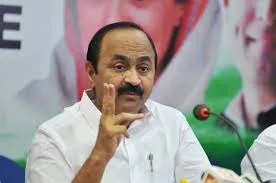
The Chief Minister VD Satheesan said the inadequate generastion capacity addition over the past decade has left Kerala vulnerable to supply shortages.
Satheesan while speaking to media on Wednesday said the government is working on a longer-term plan to address the state's recurring electricity shortages.
Elaborating on the proposed NTPC deal, Satheesan said the government is pursuing the higher allocation at a tariff of Rs5.18 per unit.
The supply currently under consideration is 540 MW, with 270 MW expected initially and the balance after the commissioning of the plant's second unit. The additional allocation being sought would take the proposed supply to 1,000 MW.
The move comes against the backdrop of Kerala's longstanding dependence on electricity purchased from outside. The state's own generation has fluctuated considerably, depending largely on rainfall and hydropower availability.
In 2024-25, internal generation met only around 22 per cent of the state's energy requirement, with the balance having to be sourced through purchases and other external arrangements.
Satheesan has attributed the limited expansion of generation capacity over the past decade to inadequate planning by the previous government. He said Kerala added only 300 MW of capacity during the ten-year period, while increasingly relying on short-term power purchases instead of securing adequate long-term supply.
September power crisis
The September power crisis brought the consequences of this dependence into sharper focus. Reduced rainfall and inflows into reservoirs constrained hydel generation just as demand rose sharply.
The loss of 500 MW availed earlier through a power-swap arrangement further tightened the supply position, forcing KSEB to resort to restrictions during peak hours.
The Chief Minister has promised a permanent solution to the state's power crisis, with a combination of long-term power purchase agreements, renewable energy generation and battery storage forming the core of the proposed strategy.
The extent of Kerala’s dependence on purchased electricity is evident from the Kerala State Planning Board's Economic Review. In 2024-25, KSEB's net internal generation was 7,278.69 million units, against an energy requirement of 33,169.29 million units.
Power purchases at the delivery point amounted to 27,141.13 million units.]
Own generation
The internal-generation share has also varied sharply from year to year. In 2021-22, net generation was 9,742 million units. It fell to 5,626 million units in 2023-24 before recovering to 7,279 million units in 2024-25.
The fluctuations underline the exposure of Kerala's power system to hydrological conditions.
The financial cost of this dependence is substantial. Satheesan has estimated the annual power purchase bill at around Rs13,000 crore and warned that it could exceed Rs16,000 crore this year.
The government is therefore looking not only at the availability of electricity but also at the cost and certainty of supply.
Satheesan reminded that much of the expansion in solar capacity in the past few years came from private initiatives rather than projects developed by the state.
"Kerala's challenge is not just to add megawatts on paper. It needs dependable power that can be delivered when demand is high, including during periods of weak monsoon inflows and at times when solar generation is unavailable," he added
The board imposed short-duration restrictions and resorted to overdrawing from the central grid as it tried to manage the shortfall.
The rise in demand is another concern for the state's planners. The chief minister has referred to the growing electricity needs of data centres and other emerging consumers. He has also spoken of a future requirement in the range of 6,000 MW to 7,000 MW.
The precise basis of that estimate — whether it refers to peak demand, total requirement or a generation target — needs to be clarified.
Solar power needs storage
The government's proposed response to the present power crisis gives a larger role to solar energy, but Satheesan has also stressed the need for battery storage.
Kerala has seen a significant expansion in rooftop solar installations, much of it driven by private consumers. However, solar generation is concentrated during daylight hours, while household and commercial demand often rises in the evening. Without storage, surplus daytime generation cannot be shifted to the hours when the system needs it most.
The chief minister has argued that the lack of adequate storage creates difficulties for KSEB in managing the changing pattern of supply from rooftop solar consumers. When their systems are not generating electricity, the board has to meet their requirements from the grid, including during peak hours.
Satheesan has said the government will combine short-term procurement with long-term power purchase agreements, depending on the state's requirements and the price at which electricity is available. The aim is to avoid a situation in which KSEB has to depend excessively on last-minute purchases during a shortage.