KOCHI: Who is really the borrower when a farmer takes a loan against a Paddy Receipt Sheet (PRS)?
The question has acquired a new dimension with Kerala Bank's FY26 audited accounts.
The bank has treated PRS loans as short-term agricultural advances to individual farmers. But its statutory auditor has questioned this treatment, saying that the repayment obligation in substance rests with Supplyco, which procures the paddy and issues the PRS.
The difference is not merely academic. The auditor says Kerala Bank's treatment resulted in an understatement of provisions by Rs25.76 crore. As a result, the bank's reported loss for FY26 is understated by the same amount.
Kerala Bank reported a net loss of Rs117.08 crore for FY26. If the auditor’s qualification is to be taken into account, the loss would be higher by Rs25.76 crore.
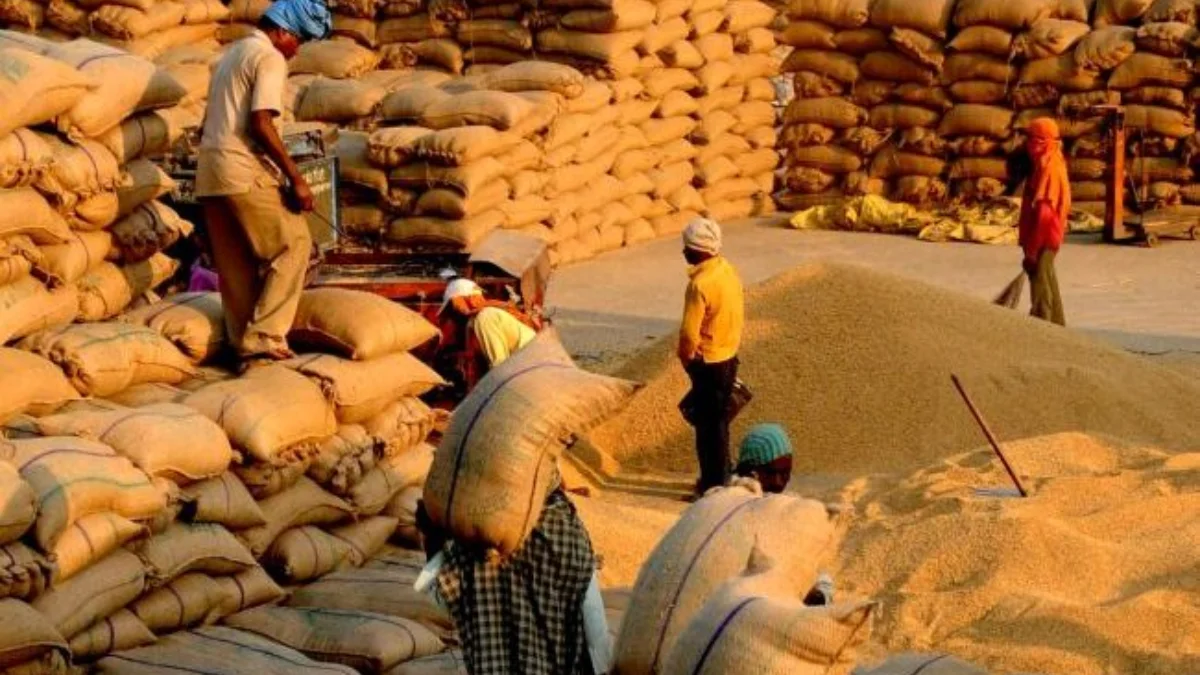
The PRS mechanism is designed as a bridge when Supplyco is unable to immediately pay farmers for paddy it has procured. Supplyco issues the PRS after procuring the paddy and the arrangement allows the farmer to take the PRS to a bank and obtain a short-term loan against the value of the paddy.
The money reaches the farmer, but Supplyco is ultimately responsible for repaying the bank. The scheme documents also describe the loans as being against receivables arising from paddy procurement by Supplyco.
That is where the accounting question arises.
Asset classification norms
Kerala Bank has classified these exposures as agricultural loans to individual farmers and applied the corresponding asset-classification and provisioning treatment.
The auditor, however, says the substance of the transaction is different. Since Supplyco is responsible for repayment, the exposure should be treated in accordance with the norms applicable to the procurement agency rather than as an ordinary agricultural loan to an individual farmer.
The auditor has also questioned the use of Supplyco's corporate guarantee as security for the provision made by the bank. If Supplyco is, in substance, the borrower, treating its own guarantee as security raises a further question on the adequacy of the provisioning.
Who’s the borrower?
This does not mean that farmers themselves have defaulted on these loans.
That distinction is important. The issue raised by the auditor is about who should be treated as the borrower for accounting and provisioning purposes, not whether individual farmers have failed to repay their loans.
The unusual nature of the arrangement has been recognised outside Kerala Bank's accounts too. Under the PRS system, banks provide the advance to farmers against the paddy procured by Supplyco, while the state government bears the liability for repayment of the principal and interest.
The government has also acknowledged problems caused by delays in repayment and updating of PRS loans. For Kerala Bank, however, the issue has now entered its audited financial statements.
And that makes the question more difficult to ignore.
If Supplyco is ultimately responsible for repayment, should a PRS loan really be treated in the same way as an ordinary agricultural loan to a farmer?
The answer has a direct bearing on how much the bank needs to provide against these loans — and, therefore, on its reported profitability.
The Rs25.76-crore qualification may not be large compared with Kerala Bank's overall balance sheet. But it exposes something more fundamental about the PRS structure: the person who receives the money and the entity that ultimately repays the bank are not necessarily the same. That distinction may matter considerably when a bank is deciding how much provision it needs to make.