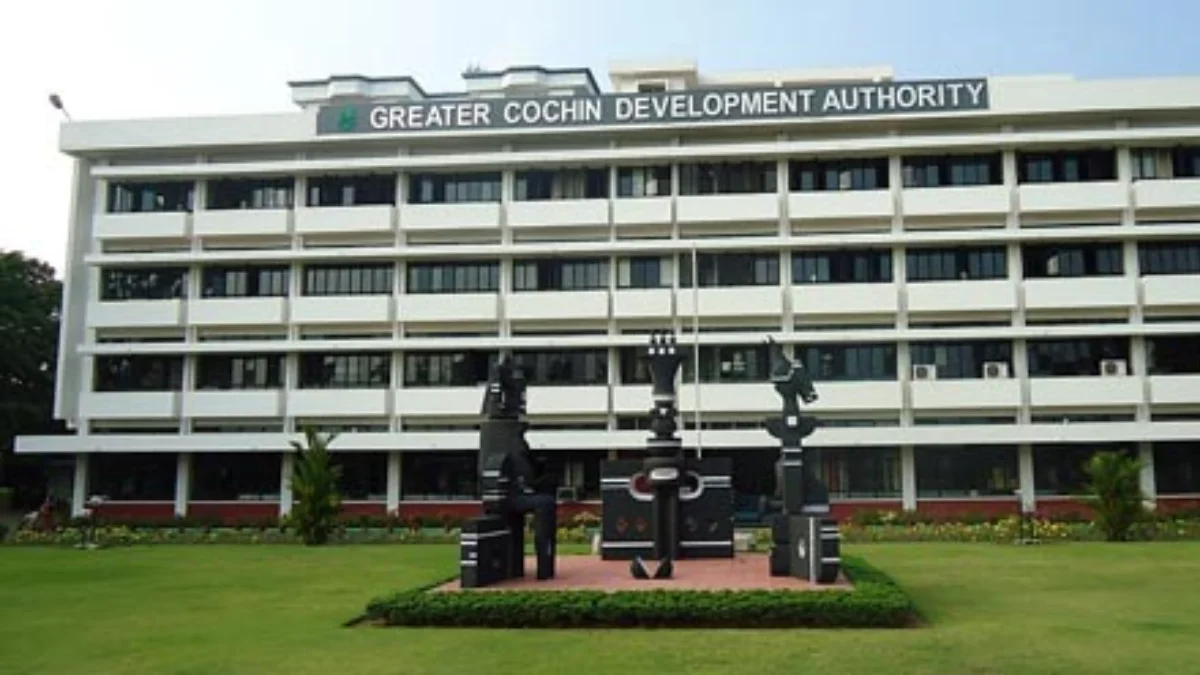
Kochi: The Greater Cochin Development Authority (GCDA) has accumulated Rs6.86 crore in guarantee-related dues to the Kerala Government, even as it has repeatedly failed to utilise a large part of the development funds provided by the State, pointing to questions over the authority's financial management.
According to the latest CAG audit, GCDA has Rs2.37 crore in outstanding guarantee commission and Rs4.49 crore in penal interest, taking its guarantee-related dues to Rs6.86 crore.
The guarantee commission is payable on borrowings backed by the State Government. The accumulation of penal interest indicates that the guarantee-related dues have remained unpaid for a considerable period.
At the same time, GCDA has repeatedly failed to utilise its State budget provision for development. The CAG has recorded 'savings' of Rs2 crore in 2022-23, Rs3 crore in 2023-24 and Rs2.40 crore in 2024-25 under the State budget head for GCDA.
In other words, against a combined provision of Rs8 crore over the three years, only Rs60 lakh was reflected as expenditure, leaving Rs7.40 crore unused.
The CAG has flagged the persistent savings, saying that such allocations indicated that the budget provisions were being made without taking into account expenditure in previous years.
The finding raises a larger question over the financial relationship between GCDA and the State Government: why is an authority incurring liabilities on government-backed borrowings while repeatedly failing to translate State development allocations into expenditure?
Crores in unused funds
The unused funds should not, however, be interpreted as Rs7.40 crore having been released to GCDA and lying idle in its bank accounts. The CAG's “savings” represent the difference between the budget provision and actual expenditure under the relevant State budget head.
The more important unanswered question is the borrowing against which GCDA's guarantee commission is being charged and the amount of that borrowing that remains outstanding.
An earlier audit of GCDA had found that the authority had borrowed Rs17 crore from the State Government between 1995 and 2005, with the liability having risen to about Rs62 crore, including interest, because of non-repayment. The latest available audit records, however, do not establish whether that entire liability or any part of it continues to remain outstanding.
GCDA has commercial properties and own sources of revenue, including income from rents and leases. Audit findings in earlier years have also pointed to shortcomings in the collection of property-related dues.
The latest findings therefore raise questions not simply about the relatively modest amount of State funds left unused, but about the efficiency of GCDA's overall financial management — its ability to collect its own revenues, service government-backed obligations and deploy public funds meant for development.
The State Government may also need to explain why allocations continue to be made to GCDA despite the authority's persistent under-utilisation of such provisions.
The CAG has effectively flagged both sides of the equation: money provided for development that is not being spent, and financial obligations arising from borrowings that remain unpaid.