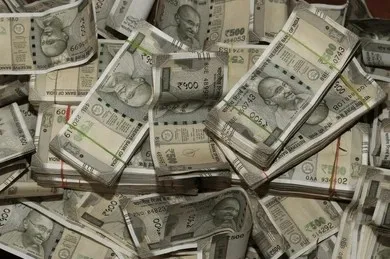
MUMBAI: The rupee settled 5 paise higher at 95.17 against the US dollar on weekend, managing to gain despite heightened risk aversion in global markets triggered by uncertainty over negotiations involving Iran and Oman on the Strait of Hormuz and a rise in crude oil prices.
The modest appreciation points to a changing balance of forces in the currency market, with foreign capital inflows providing some support to the rupee even as higher oil prices threaten to increase India's import bill and demand for dollars.
At the interbank foreign exchange market, the rupee opened at 95.27 against the greenback and moved in a narrow range of 95.16-95.28 before settling at 95.17, compared with 95.22 on the previous trading day.
Forex traders said the prospects of disruption to oil supplies through the Strait of Hormuz remained a key concern for investors.
The uncertainty surrounding the Iran-Oman negotiations and the overnight rise in crude prices encouraged caution in global markets and kept the dollar demand from importers elevated.
However, the rupee found support from foreign capital inflows, which helped offset some of the pressure arising from the oil market. Foreign equity flows turned positive in July, with $2.12 billion flowing into Indian equities, although foreign investors remained net sellers for much of the year.
The return of foreign money comes at a time when India has also been drawing sizeable foreign-currency inflows through measures aimed at strengthening its external position. RBI-linked foreign-currency deposit schemes have attracted about $41 billion, providing an additional source of dollar liquidity.
Immediate outlook
The latest movement therefore marks a contrast with the earlier phase of the year, when the rupee came under sustained pressure from a combination of elevated crude prices and foreign portfolio outflows. The currency had touched much weaker levels earlier this year amid the Middle East crisis and higher oil prices.
The immediate outlook, however, remains closely tied to crude oil and developments around the Strait of Hormuz. Any further disruption to shipping through the strategic waterway could push up oil prices and revive pressure on the rupee, while a breakthrough in the negotiations could have the opposite effect by easing the oil risk premium.
The US dollar also remains sensitive to global risk sentiment, making the rupee vulnerable to swings in capital flows even as domestic inflows provide some cushion.
For now, the rupee's ability to hold around the 95-per-dollar level despite a renewed oil shock suggests that foreign capital is increasingly acting as a counterweight to the currency's traditional vulnerability to crude prices.