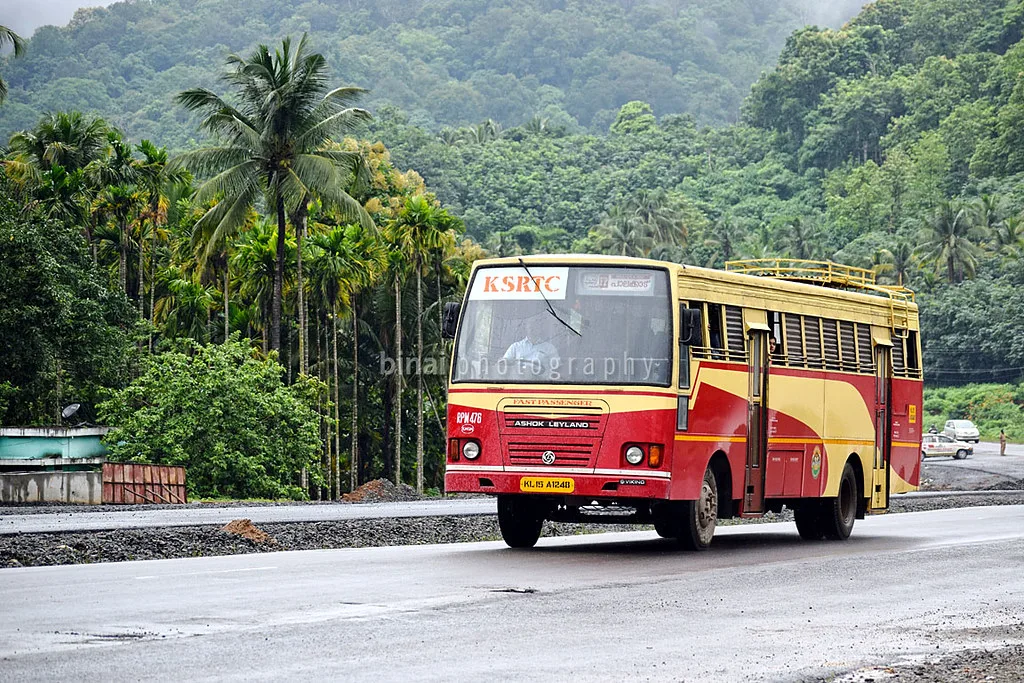
KOCHI: Kerala State Road Transport Corporation (KSRTC) may be showing improvement in revenue and employee costs, but the financial hole still remains deep.
The corporation reported a net loss of Rs1,180.37 crore in FY26, even as its operating income rose to Rs2,946 crore.
However, the net loss was lower than the Rs1,580.37 crore reported in FY25. Its operating loss before interest, lease rentals, depreciation and tax also narrowed to Rs977.93 crore from Rs1,124.81 crore, according to the financial table in the latest rating report.
KSRTC rarely places its financial statements in the public domain, making rating reports and CAG findings among the few windows available to understand the corporation's financial health, its dependence on government support and the cost of keeping its services running.
The improvement at the operating level has come alongside a moderation in employee costs. Employee expenses fell to Rs2,070 crore in FY26 from Rs2,200 crore a year earlier, as the corporation's employee strength declined from 22,015 to 20,904.
But the savings have not translated into a comparable reduction in overall operating costs. Operating expenses in FY26 stood at Rs3,924 crore, against Rs3,917 crore in the previous year.
Fuel cost
Fuel remains a major burden, accounting for around 51 per cent of total revenue. KSRTC also has limited flexibility to raise fares, which are determined by the state government.
The financial position continues to require substantial government support. The corporation has been relying on loans and advances from the state to meet operating expenses, while its debt servicing has been supported by a mechanism under which collections from 59 depots are routed through an escrow account.
The extent of the longer-term burden is evident from the CAG's State Finances Audit Report for FY25. As of March 31, 2025, repayment arrears on loans advanced by the state government to KSRTC stood at Rs11,678.64 crore.
This represents only overdue repayments of government loans, rather than the corporation's total outstanding debt.
Priyadarshini's revenue boost
The Priyadarshini scheme, introduced on June 15, 2026, has added a new dimension to KSRTC's revenue position. Under the scheme, women and transgender persons can travel free on eligible ordinary KSRTC services, with the state government bearing the cost of the fare revenue forgone.
According to the corporation's management, the scheme has increased daily revenue by around Rs1 crore. The government reimburses the corresponding fares on a monthly basis.
The arrangement, however, makes timely reimbursement important. The money which is not collected from passengers is expected to come from the government. “Any delay could put pressure on KSRTC's liquidity, even if passenger numbers and occupancy improve,” noted a financial analyst.
There is already a change in the cash flow pattern. Daily deposits flowing into the escrow account from the designated depots, which were earlier in the range of Rs3 crore to Rs3.30 crore, have moderated to around Rs2.10 crore to Rs2.30 crore after the scheme's introduction.
These deposits however remain above the daily loan instalment of Rs1.19 crore, but the trend will need to be watched, according to a rating agency.
Revenue trend in FY27
The corporation reported operating revenue of around Rs1,011 crore in the first four months of FY27. Whether the improvement can be sustained will depend not only on passenger volumes and operating efficiency, but also on the government's ability to reimburse the fares on time.
KSRTC's financial challenge, therefore, is not merely to increase revenue. It must also contain costs, meet its debt obligations and reduce its dependence on financial support from the state. On a posotive note, numbers point to an improvement, though not yet a turnaround.