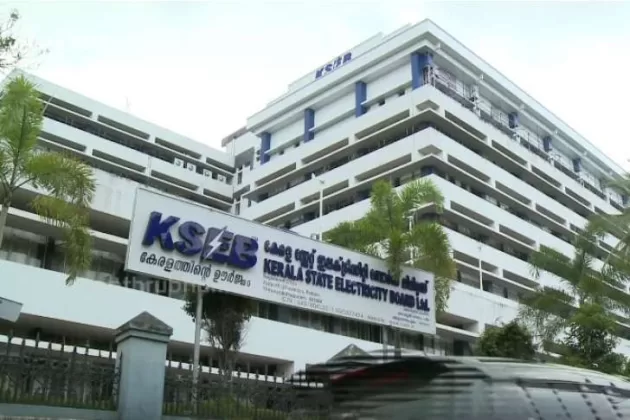
KOCHI: The Kerala State Electricity Board (KSEB) has sanctioned a 25-year agreement to procure 300 MW of assured peak power from a renewable-energy project awarded by the Solar Energy Corporation of India (SECI), securing a long-term source of power for meeting Kerala's peak-hour demand.
Under the arrangement, KSEB will procure 300 MW for a four-hour peak period, equivalent to 1,200 MWh, at a tariff of Rs6 a unit, plus Rs0.07 a unit as SECI's trading margin, taking the effective tariff to Rs6.07 a unit.
The decision was approved by KSEB's Full-Time Directors on September 8 and formally issued through an order dated September 14. The Board has authorised the execution of a Power Sale Agreement (PSA) with SECI and will approach the Kerala State Electricity Regulatory Commission (KSERC) for approval of the agreement and tariff.
SECI connection?
SECI, a Central public-sector undertaking under the Ministry of New and Renewable Energy, acts as an intermediary between renewable-energy developers and electricity distribution companies. It conducts competitive auctions, buys power from developers and sells it to discoms through back-to-back agreements.
In the present case, SECI had invited bids for 1,500 MW of assured peak renewable power for four hours, under its Firm and Dispatchable Renewable Energy - FDRE-IX scheme. The auction produced tariffs ranging from Rs5.99 to Rs6.00 a unit, with ACME Solar Holdings securing 300 MW at Rs6 a unit.
SECI subsequently offered the 300 MW capacity to KSEB. KSEB's order records that the remaining 1,200 MW from the auction had already been allocated to other distribution companies.
Not ordinary solar power
The procurement is significant because KSEB is not merely buying solar power. The project comes under Firm and Dispatchable Renewable Energy (FDRE), a model designed to make renewable power available during specified periods of high demand. Instead of taking electricity only when renewable generation is available, the buyer gets an assured power-delivery profile.
For KSEB, this means access to 300 MW of renewable peak power for four hours, providing a more predictable source of electricity during high-demand periods.
SECI's FDRE programme uses renewable generation and, where required, energy-storage systems to provide assured peak or other firm power profiles.
25-year commitment
KSEB's order sanctions the procurement for 25 years at the discovered tariff of Rs6 per unit plus the Rs0.07 SECI trading margin. The Board has also approved the draft PSA and authorised its Chief Engineer (Commercial & Tariff) to execute the agreement with SECI.
The long-term contract gives KSEB a committed source of peak power while giving the renewable-energy developer a long-term offtake arrangement.
The procurement comes at a time when Kerala's power system is facing increasing pressure during peak-demand periods, making the availability of predictable power particularly important.
The cost question
At Rs6.07 per unit, the contracted power is substantially more expensive than conventional solar tariffs discovered in earlier SECI auctions. But the comparison is not directly like-for-like.
The present procurement is for assured peak power, rather than unrestricted solar generation during daylight hours. The higher tariff reflects the additional requirement to make renewable power available in a specified four-hour peak window.
The more important question for KSEB, therefore, is not simply whether Rs6.07 is high or low compared with a conventional solar tariff, but what it would otherwise cost the Board to secure equivalent power during peak-demand periods from short-term markets or other sources.