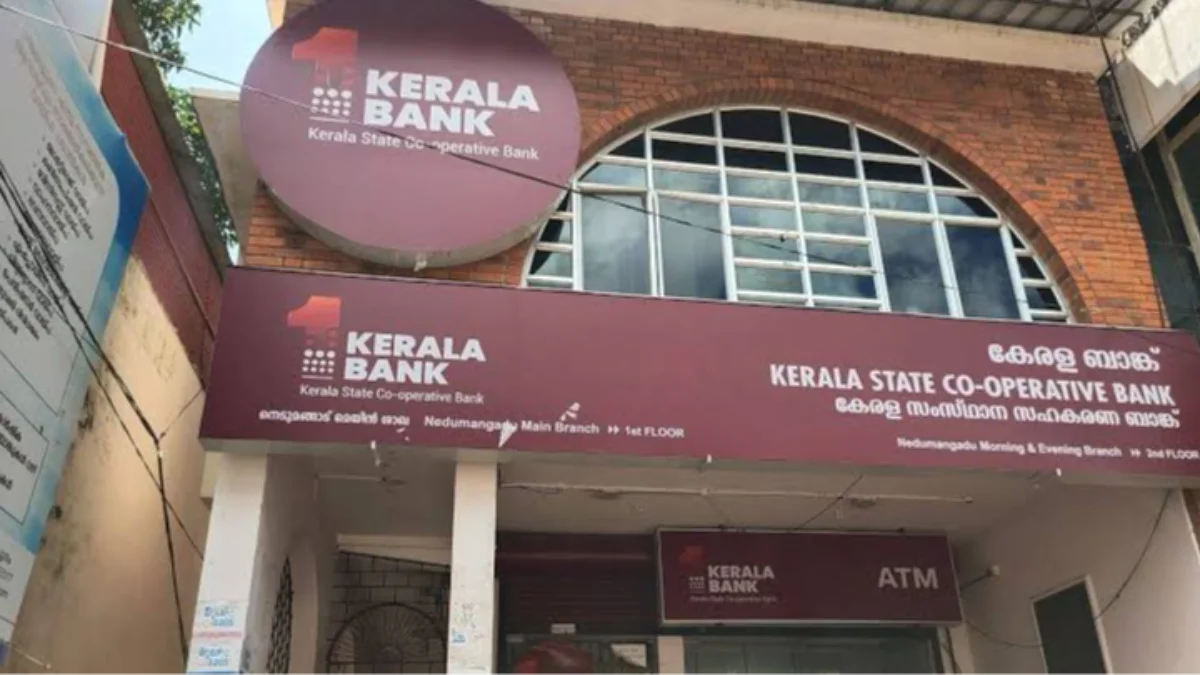
THIRUVANANTHAPURAM: Kerala Bank has slipped into a Rs117.08-crore net loss in FY26 from a profit of Rs25.73 crore in the previous year.
More worrying is that the bank's provision coverage (PCR) ratio has fallen to just 31 per cent even as its gross NPA book remains at Rs4,562.83 crore. Talking to businessbenchmark.news, CFO of a Kerala-based bank said maintaining a PCR much below 50 per cent could pose a risk to bank’s asset quality in the future.
The fall in NPAs, at first sight, is encouraging. Gross NPA ratio came down to 9.28 per cent from 11.60 per cent, while the gross NPA amount fell by about Rs921 crore.
But the bank's cushion against these bad loans has become thinner. The provision coverage ratio (PCR) fell to 31 per cent from 39.10 per cent.
The number assumes significance because Kerala Bank had indicated in April that the final profitability numbers were still to be known.
When the bank announced its FY26 business figures in April, it said total business had crossed Rs1.28 lakh crore, with deposits at Rs75,500 crore and loan outstanding at Rs53,249 crore.
CEO Jorty M Chacko had then said the final profit figures would be announced only after the statutory audit. He had also cautioned that profitability could come under pressure because of the Investment Deposit Ratio (IDR) unless regulatory relief was provided by the RBI.
The audit has now provided the answer. The bank has ended FY26 with a Rs117.08-crore loss.
PCR raises question
But the 31 per cent PCR could be the more important number.
Kerala Bank has provisions covering only about a third of its gross NPA book. The average provision coverage ratio of State Cooperative Banks was about 58.35 per cent in FY25.
So while Kerala Bank's bad-loan ratio has improved, its protection against bad loans has weakened.
That leaves the bank with an uncomfortable equation.
Low CRAR
If it wants to substantially improve the coverage of its bad loans, it will have to make additional provisions. Those provisions will hit profitability at a time when the bank has already reported a loss.
And this comes when its capital adequacy ratio (CAR) or capital to risk-weighted asset ratio (CRAR) is only marginally above the 9 per cent regulatory requirement.
The issue, therefore, is not simply that Kerala Bank made a loss.
It is whether the bank has enough provisioning and capital cushion to absorb another deterioration in asset quality.
A 31 per cent PCR leaves relatively little room if the NPA cycle turns adverse again.
For Kerala Bank, the fall in NPAs is the good part of the story. The much thinner provision cushion is the part that needs monitoring and ramp up if necessary.