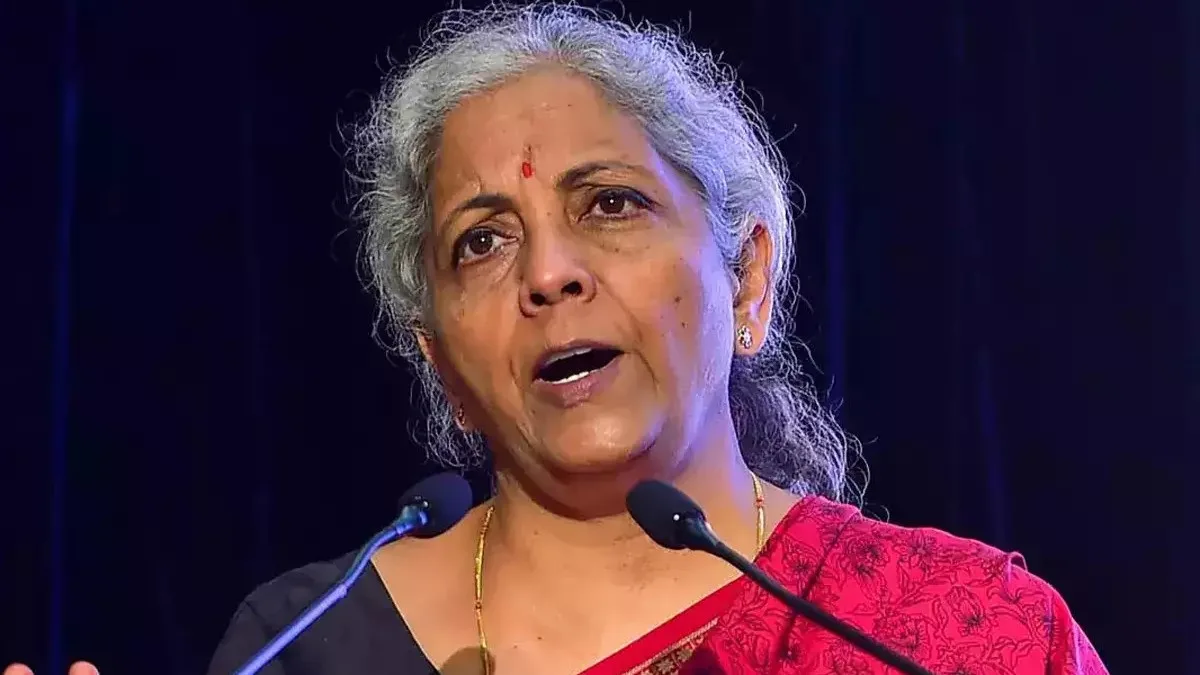
NEW DELHI: The government will soon set up a high-powered committee to examine the next phase of banking sector reforms and define the role of banks in achieving the Viksit Bharat 2047 vision, Finance Minister Nirmala Sitharaman said on Monday.
Sitharaman urged banking leaders to come up with concrete and workable recommendations that could be considered by the proposed panel. The recommendations emerging from the two-day Public Sector Bank (PSB) Confluence 2026 will also be placed before the committee.
“We are in 2026, so less than or short of 20 years is what we have before us,” Sitharaman said, stressing the need to prepare the banking system for the country's long-term growth requirements.
The proposed high-level committee on banking for Viksit Bharat was announced in the Union Budget 2026-27. It is expected to undertake a broad review of the sector and recommend measures to make the banking system better aligned with India's development needs.
Set for new reforms
Sitharaman said banks were now in a stronger position to undertake another round of reforms, with non-performing assets (NPAs) at their lowest level ever. The improvement in asset quality, she said, provides a stronger foundation for banks to focus on the future rather than merely addressing legacy problems.
The PSB conclave is discussing seven key areas — deposit mobilisation, banking for youth, supporting the investment cycle, global capability centres, agriculture and horticulture value-chain infrastructure, priority-sector lending and reimagining the credit-card business.
Banking for the youth has received particular attention, with Sitharaman pointing out that nearly 29 per cent of India's population is in the 15-29 age group. She said banks would have to factor this demographic profile into their products and strategies.
The discussions also come amid concerns over the changing pattern of household borrowing, with non-housing retail loans accounting for 58.4 per cent of household borrowings as of March 2026.
The government expects the deliberations among bankers and financial-sector stakeholders to provide substantive inputs for the proposed committee as it charts the next generation of banking reforms.