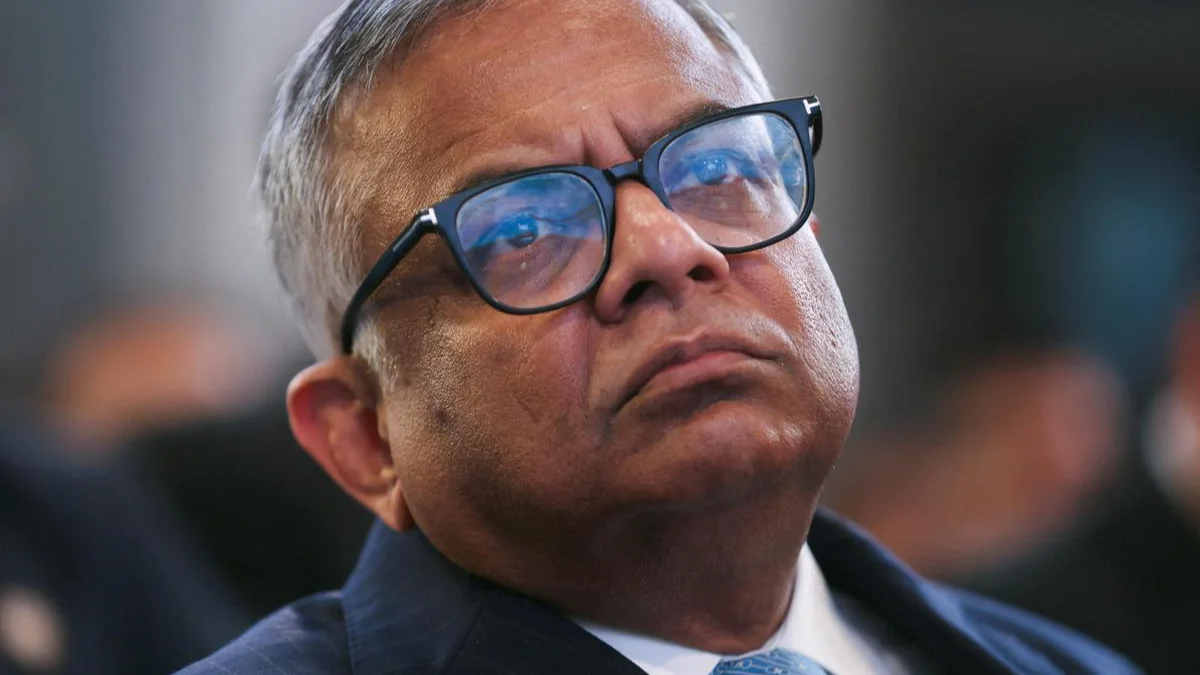
MUMBAI: India’s largest business conglomerate, the Tata Group, is facing one of the most consequential governance battles in its recent history, with a growing divide between the board of Tata Sons, led by Chairman N. Chandrasekaran, and Tata Trusts, the holding company’s largest shareholder chaired by Noel Tata.
At the centre of the dispute are two closely linked issues: the future of Chandrasekaran as chairman of Tata Sons and the proposed listing of the holding company.
The Tata Sons board on September 17 backed a fresh five-year term for Chandrasekaran, reversing his decision announced in August that he would not seek reappointment when his present term ends on February 20, 2027. The board also decided to proceed with the steps required to comply with the Reserve Bank of India’s (RBI) directions that could lead to the listing of Tata Sons.
The decisions, however, have triggered strong opposition from Noel Tata. Tata Trusts has maintained that Chandrasekaran’s decision not to seek another term had already been accepted and that the subsequent resolution to reappoint him was invalid under the Articles of Association of Tata Sons. Noel Tata voted against the resolution. The Trusts have described it as a “legal nullity” and said they remain committed to a leadership transition.
Shareholder with 66% stake
The dispute is particularly significant because Tata Trusts collectively own about 65.9% of Tata Sons; the remaining is owned by the Shapoorji Pallonji Group (18.4%), Tata Group companies (12.9), and others (2.8%). Tata Trusts’ 65.9% constitutes Sir Dorabjee Tata Trust (28%), Sir Ratan Tata Trust (23.6%), JRD Tata Trust (4%), Tata Education Trust (3.7%), Tata Social Welfare Trust (3.7%), RD Tata Trust (2.2%), MK Tata Trust (0.6%), and Sarvajanik Seva Trust (0.1%).
The Articles of Association are now at the centre of the dispute. Tata Trusts argues that the appointment or reappointment of the Tata Sons chairman requires the support of the Trusts' nominee directors. Since Noel Tata voted against the resolution, the Trusts contend that the board could not validly approve the reappointment.
The Tata Sons board, however, has proceeded with the decision, setting the stage for a potentially prolonged legal and corporate battle.
The disagreement over Chandrasekaran's tenure is only one part of the larger conflict. The second and potentially more far-reaching issue is whether Tata Sons should remain a privately held company or move towards a stock-market listing.
The RBI classified Tata Sons as an “upper-layer” non-banking financial company in 2022. Such entities are subject to regulatory requirements that include a public listing. Tata Sons had sought to surrender its Core Investment Company (CIC) registration and avoid the listing requirement, but the RBI rejected that request in September, pushing the company towards compliance with the listing framework.
Clash of philosophies
Noel Tata's opposition is not merely about the financial consequences of a listing. It reflects a fundamental difference over the ownership philosophy that has shaped the Tata Group for more than a century.
Tata Trusts argues that the group was conceived as an instrument of national service conducted through business and that its ownership structure has enabled it to pursue this philosophy. The charitable trusts receive dividends from their stake in Tata Sons, which help fund their philanthropic activities.
Noel Tata has also pointed to a decision taken by the Tata Sons board in March 2024, under the guidance of the late Ratan Tata, when the board unanimously resolved that Tata Sons should remain unlisted.
He has argued that taking the company public could alter the character of the group by introducing shareholders whose primary objective would be financial returns.
Tata Trusts has therefore maintained that preserving the existing ownership structure is central to the Tata Group's identity.
The Trusts' philanthropic activities depend on dividends generated by Tata Sons. According to Tata Trusts CEO Siddharth Sharma, the Trusts are expected to increase their philanthropic spending to around Rs2,000 crore this financial year.
What a listing could change
A listing of Tata Sons would be an unprecedented event for the group and potentially one of India's largest public offerings.
The immediate question is whether a listing would materially alter the Trusts' controlling position.
Existing shareholders could potentially see their holdings diluted depending on the structure of the offering, while an offer-for-sale (OFS) could provide existing shareholders with an opportunity to monetise part of their holdings. The consequences would therefore depend heavily on the eventual structure, size and terms of the offering.
For Tata Trusts, the concern goes beyond ownership percentages. A change in the shareholder base could introduce greater pressure for financial returns and potentially influence how capital is allocated across the wider group.
That argument has to be weighed against the regulatory rationale for bringing large financial holding companies under greater market and disclosure discipline.
A difficult road ahead
The immediate battle is likely to move to the shareholder level. The board's decisions on Chandrasekaran's reappointment and the listing process require shareholder approval. Tata Trusts, with its roughly 66% holding, has considerable influence over the outcome.
At the same time, the Trusts themselves are not necessarily completely aligned on the listing question, adding another layer of complexity to the dispute.
The situation is further complicated by questions surrounding the Tata Sons Articles of Association, the regulatory status of the company and the possibility of legal proceedings.
The issue is therefore no longer simply about who occupies the chairman's office at Tata Sons. It is about the institutional balance between the board, the Tata Trusts and other shareholders, and about how the ownership model of one of India's most influential business groups may evolve.
For a group built over more than 150 years around a distinctive relationship between business and philanthropy, the decisions now before Tata Sons could have consequences that extend well beyond the current boardroom confrontation.
The next chapter will be shaped by shareholder approvals, regulatory action and, potentially, the courts. Until then, Tata Sons remains at a crossroads — between an ownership structure rooted in its philanthropic legacy and a corporate framework increasingly shaped by modern financial regulation and capital markets.