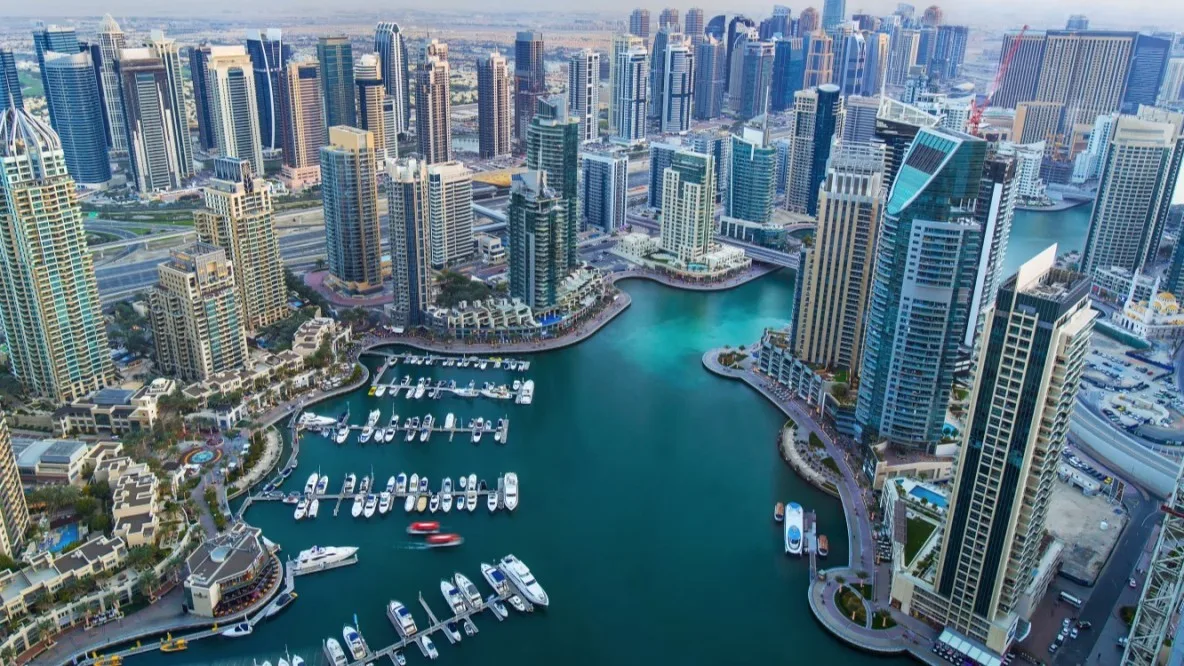
DUBAI: The United Arab Emirates' real estate sector has reinforced its standing during the first half of 2026 as one of the world's most dynamic and compelling destinations for property investment.
Bolstered by a resilient national economy, business-friendly government policies, and a sustained influx of international investors and capital, the sector's momentum shows every sign of carrying through into the second half of the year. Key market indicators confirm that the UAE remains firmly positioned among the elite tier of global real estate investment hubs.
Industry leaders and market analysts emphasised that the sector's robust performance signals its evolution into a more mature and sustainable phase, underpinned by solid economic fundamentals rather than short-term speculation. This assessment aligns with recent findings from leading global consultancy firms.
In a report released in April, CBRE highlighted the UAE's formidable economic foundations — anchored by substantial financial reserves and a stable sovereign credit rating — while projecting a strong GDP growth rebound by 2027.
Knight Frank, in a separate analysis, affirmed that Dubai has cemented its status as a premier destination for global wealth migration and real estate investment, with the UAE continuing to rank among the fastest-growing nations in terms of ultra-high-net-worth individual populations.
The numbers tell a compelling story of market acceleration. According to an analysis by the ADXinteract platform, the combined value of apartment and villa sales surged by 173.9% to surpass AED 84.4 billion, while transaction volumes climbed 103% to 16,585 deals compared to the same period last year.
In Dubai, research from W Capital Real Estate Broker revealed that market sales exceeded AED 286 billion during the first half of 2026 — marking the second-highest half-year sales figure in the emirate's history, trailing only the record set in H1 2025 when sales reached AED 326.6 billion.
A further report from the firm documented that newly announced real estate projects launched since January 2026 had a combined value exceeding AED 275 billion, representing the largest half-year cycle of new project launches ever recorded in Dubai.
Leadership perspectives
Farhad Azizi, Group CEO of Azizi Developments, described the real estate sector as having "continued to reinforce its role as one of the key drivers of the national economy." He pointed to genuine housing demand, sustained foreign investment inflows, and a rising proportion of self-financed buyers as evidence of the market's deepening maturity.
Azizi also credited the UAE's stable economic environment, flexible regulatory framework, and long-term development vision for enhancing its appeal to global capital.
Looking ahead, Azizi anticipates sustained positive performance through the second half of the year, characterized by more balanced and sustainable growth. He believes competition will increasingly favor projects distinguished by high-quality planning, rapid execution, strategic locations, and enduring investment value.
This outlook is supported by population growth, expanding economic activity, and resilient demand for residential properties. Specific tailwinds include continued population expansion driven by long-term residency programs, ongoing implementation of Dubai's D33 Economic Agenda, the expansion of infrastructure projects — particularly in Dubai South and the vicinity of Al Maktoum International Airport — and anticipated improvements in mortgage financing solutions. Together, these factors are expected to bolster confidence among developers and investors in the years ahead.
Hussein Salem, CEO of Ohana Development, observed that the market has entered a more mature stage where growth is propelled by long-term, structural demand rather than transient forces. He noted that both Abu Dhabi and Dubai have continued to register record-breaking transaction figures, reflecting the market's depth and its capacity to attract domestic and international capital alike.
Salem expects the positive trajectory to persist through the second half of the year, albeit at a more measured pace, with sustained appetite for well-planned residential communities, branded developments, and waterfront projects.
The introduction of carefully calibrated new supply, he added, will help maintain a healthy equilibrium between supply and demand.
He stressed that the market's resilience rests on structural pillars: population growth, continued foreign investment inflows, long-term residency programs, government infrastructure spending, economic diversification, and the broadening of mortgage financing — all of which contribute to market stability while favoring projects that demonstrate sound planning and high-quality execution.
Quality and differentiation take centre stage
Thomas Wan, Founder and CEO of Refine, emphasized that the UAE real estate sector continues to exhibit a high degree of resilience. While demand remains robust, Wan observed that buyers are becoming increasingly discerning — scrutinising project quality, location, developer reputation, and the overall living experience.
This shift, he argued, reflects greater market awareness and maturity. He stressed that developers' success in the coming period will hinge on delivering projects that genuinely meet market needs, adopting well-considered pricing strategies, and sharpening their competitive edge as new supply continues to enter the pipeline.
Syed Mahrooz, CEO and Chief Financial Officer of Albagh Group, affirmed that the UAE real estate sector has sustained its vigorous performance throughout 2026, preserving its status as one of the world's most attractive property markets.
He attributed this strength to robust demand, the success of the country's long-term development vision, continued economic diversification, the growing concentration of high-net-worth individuals, progressive residency and investment policies, and ongoing infrastructure expansion — all of which have reinforced the UAE's position as a preferred destination for long-term investment and residency for both individuals and businesses.
Mahrooz added that the market is expected to remain active through the remainder of the year, with sustained demand for premium residential communities, branded developments, waterfront destinations, and high-quality commercial assets.
Investors, he noted, are increasingly prioritising long-term value, quality of life, and asset sustainability in their decision-making — a trend that bodes well for the continued evolution of the UAE's real estate landscape.